
Steroids Blog
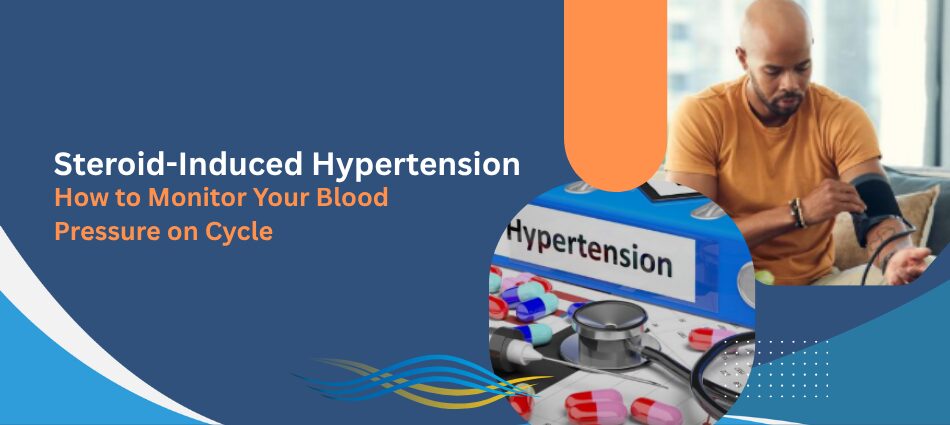
Steroid-Induced Hypertension: How to Monitor Your Blood Pressure on Cycle
Jul
High blood pressure is one of the most common side effects of a steroid cycle. It is also one of the most ignored. You cannot feel high blood pressure most of the time. There is no obvious warning sign. It just quietly damages your arteries, strains your heart, and raises your risk of a stroke or heart attack while you are focused on hitting new PRs. Swolverine research confirms that steroid-induced hypertension can cause vascular damage, cardiac strain, and kidney dysfunction that far outweigh any temporary gains from the cycle. The good news is it is manageable if you actually pay attention to it.
Why Do Steroids Raise Your Blood Pressure?
Steroids push blood pressure up through more than one pathway at the same time.
Water and sodium retention is the most well-known cause. Steroids, particularly those with strong mineralocorticoid activity, cause the kidneys to hold onto more sodium. More sodium means more water retained in the body. More fluid volume means the heart pumps more blood with each beat, which raises pressure inside the blood vessels.
More red blood cells is another major factor. Steroids increase red blood cell production, which makes the blood thicker. Thicker blood is harder to push through the circulatory system. The heart works harder, and pressure goes up.
Increased sensitivity of blood vessels is a third pathway. Research from PubMed confirms that cortisol and related compounds increase how strongly blood vessels respond to adrenaline and other stress signals, even without any change in the nervous system itself. The vessels tighten more easily, which raises resistance and pushes pressure higher.
Estrogen and hormonal shifts also play a role. Aromatizing steroids convert to estrogen, and estrogen influences vascular tone and fluid balance. When estrogen is not managed properly on cycle, it contributes to both water retention and blood pressure increases.
All of these can happen at the same time on a single cycle. That is why blood pressure can climb significantly even in the first two to four weeks.
What Do Blood Pressure Numbers Actually Mean?
Before you can monitor effectively, you need to know what you are looking at.
Blood pressure is recorded as two numbers. The top number (systolic) is the pressure when your heart beats and pushes blood out. The bottom number (diastolic) is the pressure when the heart rests between beats.
Here is how to read your numbers:
- Below 120/80 is normal and where you want to be
- 120 to 129 / below 80 is elevated but not yet high
- 130 to 139 / 80 to 89 is Stage 1 high blood pressure
- 140/90 or above is Stage 2 high blood pressure and needs action
- 180/120 or above is a hypertensive crisis and requires emergency care
Swolverine’s guidance for steroid users is to stay below 130/80 during a cycle. If readings consistently hit 140/90 or above, that is the point where intervention is required, not optional.
How to Take Your Blood Pressure Correctly at Home?
Most people with home monitors are taking readings incorrectly and getting numbers that do not reflect their actual baseline.
Buy the right device. An upper arm cuff monitor is more accurate than a wrist device. Wrist monitors pick up too many movement artifacts and are less reliable for trend monitoring.
Sit quietly first. Rest for at least 5 minutes before taking a reading. Do not measure right after exercise, caffeine, a meal, or any stimulant supplement. These can add 10 to 20 points to your systolic reading temporarily.
Position correctly. Sit with your back supported, feet flat on the floor, and your arm resting on a table at heart level. Your arm should be relaxed, not held up by your own muscles.
Take two readings. Take your blood pressure twice, two minutes apart. Average the two numbers. Single readings are unreliable because of natural moment-to-moment variation.
Measure at the same time each day. Morning before eating or taking anything is the most consistent window. This gives you a comparable baseline across the cycle.
Do not measure after a stressful event. Stress temporarily raises blood pressure. A reading taken right after a difficult conversation or a hard training session tells you very little about your actual trend.
When to Measure and How Often?
Timing and frequency matter as much as the device you use.
Before the cycle starts: Take readings every morning for one week and average them. This is your true baseline. You cannot know if steroids are raising your blood pressure if you do not know where you started.
During the cycle: Check every morning. Blood pressure can start rising in the first two to three weeks of a cycle, especially with compounds like testosterone, Deca, or oral steroids like Dianabol and Anadrol. Daily monitoring lets you catch upward trends early.
If you feel symptoms: Headache at the back of the head, blurry vision, ringing in the ears, or a flushed face during the day are all warning signs. Check your blood pressure immediately if any of these appear.
After the cycle ends: Monitor for at least four weeks post cycle. Blood pressure does not always return to baseline instantly when steroids stop. It can remain elevated while the body is still clearing compounds and recovering fluid balance.
Which Steroids Raise Blood Pressure the Most?
Not all compounds are equal when it comes to blood pressure impact.
Highest risk:
- Anadrol (oxymetholone): strong water retention, consistently linked to significant blood pressure increases
- Dianabol (methandrostenolone): aromatizes heavily, causes water retention and estrogen-driven pressure increases
- Trenbolone: raises blood pressure through increased red blood cell production and direct vascular effects without aromatization
- High-dose testosterone: aromatization plus water retention, dose-dependent effect
Moderate risk:
- Deca-Durabolin (nandrolone): moderate water retention, moderate blood pressure effect
- Testosterone at moderate doses: manageable with proper estrogen control
Lower risk:
- Anavar (oxandrolone): mild blood pressure impact, low water retention
- Masteron (drostanolone): does not aromatize, lower blood pressure impact
- Primobolan: mild overall cardiovascular effect
Stacking multiple compounds multiplies the blood pressure risk. Two moderate-risk compounds together can produce the same effect as one high-risk compound.
What Can You Do to Keep Blood Pressure Under Control?
Blood pressure on cycle is manageable with the right approach. Here is what actually works.
Control your sodium intake. Steroids already cause the body to hold onto sodium. Adding a high-sodium diet on top of that pushes blood pressure higher faster. Stay under 2,300 mg of sodium per day during a cycle and lower it if you are prone to water retention.
Increase potassium. Potassium balances sodium in the body and supports healthy blood vessel function. Foods like bananas, potatoes, avocado, and leafy greens are good sources. Aim for 3,500 to 4,700 mg per day.
Stay well hydrated. Dehydration concentrates the blood and makes thick steroid-affected blood even harder to pump. Drink enough water throughout the day.
Do regular cardio. Steady-state cardio, like 20 to 30 minutes of moderate-intensity work three to four times per week, directly supports cardiovascular health and helps the heart handle the increased workload from a cycle.
Manage estrogen. If you are running aromatizing compounds, appropriate use of an aromatase inhibitor keeps estrogen at healthy levels and removes one of the main drivers of water retention and blood pressure increases.
Supplements with actual evidence:
- Fish oil or krill oil at 3 to 4g per day supports arterial flexibility and has consistent research behind its blood pressure lowering effect
- Magnesium supplementation supports vascular relaxation
- CoQ10 supports heart function under increased demand
Consider medication if needed. If blood pressure consistently reads above 140/90 despite lifestyle measures, a doctor can prescribe a short course of medication to bring it down safely. ACE inhibitors and calcium channel blockers are the most commonly used options in this context. This is not a sign of failure. It is sensible harm reduction.
Signs Your Blood Pressure Is Getting Dangerous
Most of the time, high blood pressure gives no warning. But when it gets severe, these symptoms can appear:
- Persistent headache, especially at the back of the head or temples
- Blurred or double vision
- Nausea without an obvious cause
- Dizziness or feeling like the room is spinning
- A flushed, red face during normal activity
- Shortness of breath at rest
- Chest tightness or pressure
If any of these appear, check your blood pressure right away. If it reads above 180/120, that is a hypertensive crisis. Stop training, sit quietly, and seek medical attention. Do not wait to see if it comes down on its own.
FAQs
Does blood pressure go back to normal after stopping steroids?
Usually yes, but not always immediately. For most users, blood pressure returns to baseline within four to eight weeks of stopping. If it stays elevated beyond that, medical evaluation is needed.
Which is better: wrist monitor or upper arm cuff?
Upper arm cuff every time. Wrist monitors are less accurate and give more variable readings. For tracking trends during a cycle, accuracy matters.
Can you feel high blood pressure?
Most of the time, no, which is exactly why monitoring matters. By the time you feel symptoms, blood pressure is often already at a dangerous level.
Does cardio actually help blood pressure on cycle?
Yes. Regular moderate cardio is one of the most effective non-medication strategies for keeping blood pressure manageable during a cycle. It improves how efficiently the heart works and supports arterial flexibility.
Should you stop your cycle if blood pressure spikes?
If it consistently reads above 140/90 and does not respond to lifestyle adjustments within a few days, yes, reducing the dose or pausing the cycle is the responsible call. Continuing a cycle with uncontrolled hypertension is where serious cardiovascular damage happens.
Conclusion
Steroid-induced hypertension is real, common, and silent. It does not announce itself until something goes seriously wrong. Checking your blood pressure before, during, and after every cycle is the single most important monitoring habit you can build. Know your numbers, know what they mean, and know when to act. The gains from a cycle mean nothing if they come at the cost of your long-term cardiovascular health.

Leave a Reply